
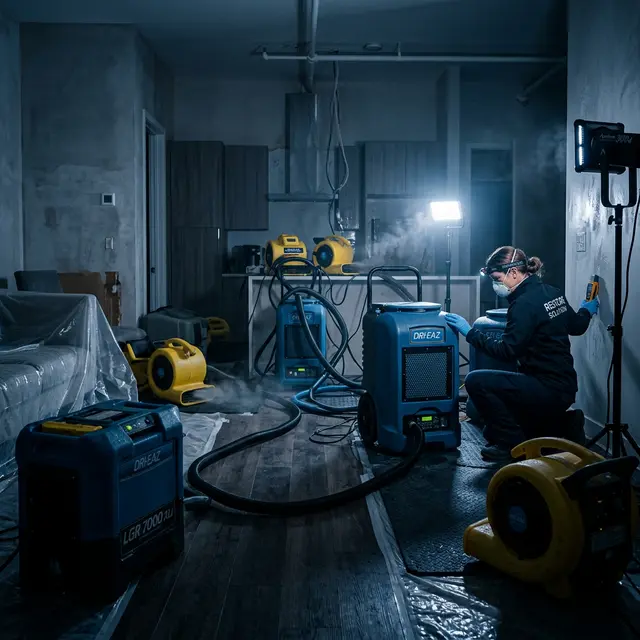
After a leak or flood, the water you can see is only part of the problem. The real threat soaks into floors, walls, and framing. Drying a home correctly takes more than fans and open windows. Mesa restoration pros follow a proven process to remove every drop. Here is how that structural drying actually works.
Key Takeaways
- Real drying targets moisture hidden inside floors, walls, and framing, not just the surface.
- Pros use moisture meters, air movers, and dehumidifiers to dry a home fully.
- Drying within 24 to 48 hours is the key to preventing mold.
Step 1: Inspection and Moisture Mapping
Drying starts with finding all the water. Technicians use moisture meters and infrared cameras. These tools reveal dampness behind walls and under floors. A moisture map guides where equipment should go. You cannot dry what you have not found.
Step 2: Water Extraction
Standing water comes out first, and fast. Pumps and truck-mounted extractors pull gallons quickly. Removing bulk water shortens the whole drying time. Wet carpet padding is often removed at this stage. The faster water leaves, the less damage spreads.
Step 3: Structural Drying
Now the hidden moisture gets targeted directly. Air movers push air across wet surfaces to speed evaporation. Dehumidifiers pull that moisture out of the air. Together they dry framing, drywall, and subfloors. The IICRC sets the industry standard for this drying process.
Step 4: Monitoring and Mold Prevention
Drying is verified, not guessed. Technicians track moisture readings daily until materials hit target levels. The Insurance Information Institute notes water claims are common and costly. Thorough water damage restoration in Mesa prevents the mold that follows poor drying. If mold has already started, mold remediation runs alongside drying.
What to Do Before the Pros Arrive
Your first moves shape how much you save. Fast, simple steps slow the damage. They also make the professional job easier.
Stop the Source and Air It Out
Shut off the water at the source if you can. Open windows and doors to start air moving. Mop and towel up standing water right away.
Use Fans and a Wet/Dry Vac
Set box fans to push air across wet floors. A wet/dry shop vac pulls water from carpet. Pull up soaked padding so the subfloor can breathe.
Drying Walls After a Leak
Walls hide more water than their surface shows. Drywall wicks moisture up into the cavity behind it. How long it takes depends on how wet it got.
Will Wet Drywall Dry on Its Own?
Lightly wet drywall can dry with airflow and low humidity. Crews often vent the cavity to speed it. Saturated or contaminated drywall has to come out.
How Long Wall Drying Takes
Surface dampness can clear in a day or two. A soaked wall cavity may take several days. Meters confirm the cavity is dry, not just the paint.
How to Tell If Water Damage Is Permanent
Some damage reverses with drying, and some does not. Knowing the difference saves money and worry. A few signs point to lasting harm.
Warning Signs of Lasting Damage
A musty smell that lingers after drying suggests hidden mold. Stains that return and soft, spongy materials are red flags. Warping that will not flatten usually means replacement.
Why Mesa Homes Hide It
Arizona's dry air dries surfaces fast and fools homeowners. The moisture deep in framing lingers out of sight. Monsoon flooding makes that hidden water worse.
Drying After a Pipe Burst or Flooded Room
A burst pipe or flooded room calls for a faster response. The volume of water is higher and spreads quickly. Speed matters even more in these cases.
Move Water Out First
Pump or vacuum standing water before anything else. The less water sitting on materials, the less they absorb. Lift wet rugs and furniture off the floor.
Then Dry the Whole Room
Run air movers and a dehumidifier together in the space. A sealed room dries faster than an open one. Keep the gear running until meters read dry.
Can I dry out water damage myself?
Household fans dry surfaces but miss hidden moisture. Trapped dampness leads to mold and warping. Pros dry the structure, not just the floor.
How long does professional drying take?
Most homes dry in three to five days. Severe saturation can take longer. Daily moisture checks confirm completion.
Why are dehumidifiers so important?
Air movers lift moisture into the air. Dehumidifiers then remove it from the room. Without them, that moisture resettles elsewhere.
How do pros know when a home is dry?
They compare readings to a dry baseline. Materials must reach target moisture levels. Numbers, not guesses, end the job.
Will wet drywall eventually dry out?
Lightly wet drywall can dry with airflow and low humidity. Saturated or contaminated drywall has to be removed. Meters confirm the wall cavity is truly dry.
How can you tell if water damage is permanent?
A lasting musty smell, returning stains, and spongy materials are warning signs. Warping that will not flatten usually means replacement. A pro can confirm what is salvageable.
Get It Dried Right the First Time
Proper drying separates a clean recovery from a moldy one. Our RestoPros of The East Valley team dries Mesa homes to verified targets. After water damage, our water damage restoration team can start drying fast. You can contact RestoPros of The East Valley any time.