
Your Mesa home just took on water — burst pipe, AC drain failure, monsoon roof leak, slab leak. The next 24 hours determine whether your final bill is $2,000 or $20,000.
This guide walks through the first 24 hours water damage checklist for Mesa homeowners, with East Valley-specific guidance for monsoon, slab leaks, and AC condensate. For broader scope or after-cleanup remediation, see our Water Damage Restoration page.
Key Takeaways
- Hours 0-1: stop the source, ensure safety, document everything with photos.
- Hours 1-4: extract standing water, contact your insurance carrier, call a local IICRC-certified restoration team.
- Hours 4-24: remove unsalvageable materials, begin commercial drying, prevent secondary damage.
First 24 Hours: Step-by-Step Checklist
1. Shut Off Water Source
For plumbing leaks: shut off the main water valve (usually outside near the front of the house, or in the garage). For AC condensate: turn off the AC at the thermostat. For roof leaks during monsoon: place buckets and tarp the breach if safe.
2. Kill Power to Affected Areas
If water touches outlets, electrical panels, or appliances, kill power at the breaker. Do not enter standing water with energized circuits. If you cannot reach the breaker safely, call your utility company for emergency disconnect.
3. Move People + Pets to Safety
Per Red Cross flood safety guidance, sagging ceilings or buckled floors signal structural risk. Evacuate immediately if anything looks unsafe.
4. Document with Photos and Video
Take photos of every affected room from multiple angles. Video walk-through of the entire damage area. Close-ups of damaged contents (furniture, electronics, clothing). Date-stamp everything. Insurance adjusters need this documentation to approve claims.
5. Extract Standing Water
For more than 1 inch of standing water, rent a wet/dry shop vac or call professionals. Standing water more than 4 hours saturates flooring underlayment and subfloor — significantly raising mold risk and final cost.
6. Contact Your Insurance Carrier
Per III data, water damage is the second most common homeowner claim with $13K average payout. Open the claim within 24 hours; describe the cause (burst pipe, AC failure, monsoon roof leak) and the damage scope. Get the claim number.
7. Call a Local IICRC-Certified Restoration Company
Local Mesa crews can be onsite within 60-90 minutes. Companies promising same-day or next-day are dispatching from out of town and will lose the speed advantage. Direct insurance billing should be standard.
8. Move Salvageable Contents to Dry Area
Furniture (especially wood and upholstered), electronics, paper goods, photos, books, and rugs need to come out of the wet zone. Wet contents in a wet space = mold within 24-48 hours.
9. Remove Unsalvageable Materials
Wet drywall over 12 hours, wet carpet pad, wet insulation need to come out. Per EPA guidance, drying these in place rarely works — they become mold reservoirs. Cut drywall 2 inches above water line.
10. Begin Commercial Drying
Commercial-grade dehumidifiers + high-velocity air movers run continuously for 3-5 days. In Mesa, dry climate helps — but during monsoon humidity, you need professional equipment to keep pace.
Mesa-Specific Scenarios
Monsoon Roof Leaks
Tarp the roof breach immediately if safe. Document interior + exterior damage separately for insurance. Most monsoon damage is wind-driven rain (covered by homeowners) — not flood. Get a roofer assessment within 7 days.
AC Condensate Failures
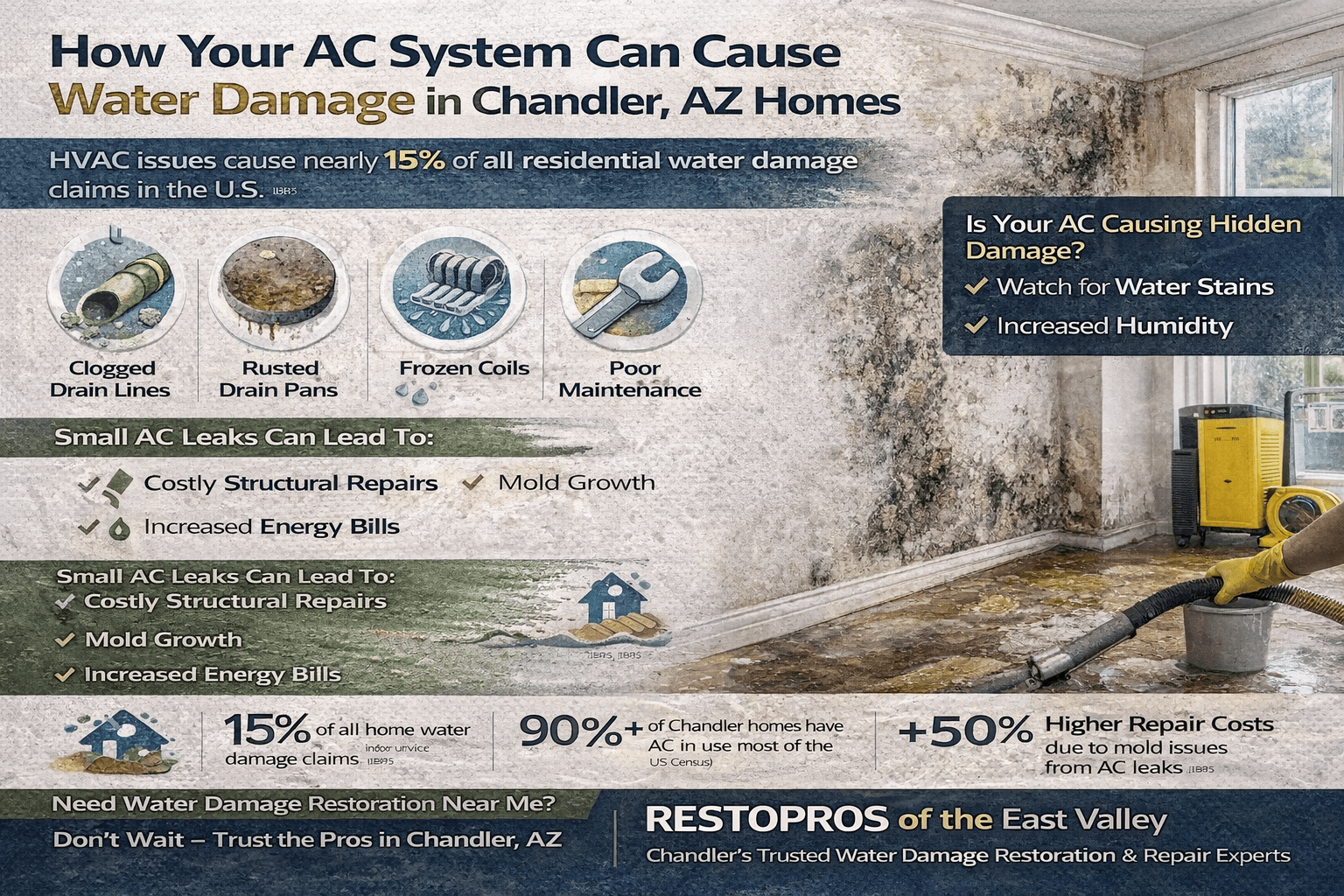
Turn off AC. Drain pan and condensate line need cleaning before restart. Ceiling drywall affected by AC drips usually needs replacement (water has been seeping for weeks before discovery). HVAC tech inspection mandatory before resuming AC.
Slab Leaks
Phoenix-area slab leaks require leak detection ($300-$500), slab cut + repair ($2,000-$5,000), then water restoration. Insurance covers sudden slab leaks in most cases. Document carefully — gradual leaks may face partial denial.
When DIY Is NOT Enough
Call professionals immediately if: more than 100 sqft wet, Cat 2 or Cat 3 water (gray or floodwater), wet for over 24 hours, structural materials affected (drywall, hardwood, insulation), or insurance claim involved.
What to do in the first hour after water damage?
Stop the source, kill power, evacuate if structural risks, document with photos, then start contacting insurance + restoration. Speed in the first hour saves thousands later.
Should I call insurance or restoration first?
Call restoration first if water is actively spreading — they can stop further damage while you call insurance. Otherwise call insurance first to open the claim, then restoration. Many restoration companies handle direct insurance billing.
Can I clean water damage myself?
For under 100 sqft of clean water (Cat 1) caught within hours, DIY drying with rented equipment is feasible. Anything larger, longer, or contaminated needs professional restoration.
When does mold start growing after water damage?
Per CDC, mold begins within 24-48 hours. Mesa dry climate may slow this to 48-72 hours; monsoon humidity compresses to 24-36.
Mesa Water Damage? Get a Pro Onsite Within the Hour.
Every hour after water damage drives the cost up. RestoPros of The East Valley provides 60-90 minute response across Mesa, Gilbert, Chandler, Tempe, Queen Creek, Apache Junction with IICRC certification + direct insurance billing. Visit our water damage page for a free written estimate.
Wondering what the recovery will run? Our water damage restoration cost guide breaks down the factors that set the price — and our Mesa, AZ restoration services page covers local response.