
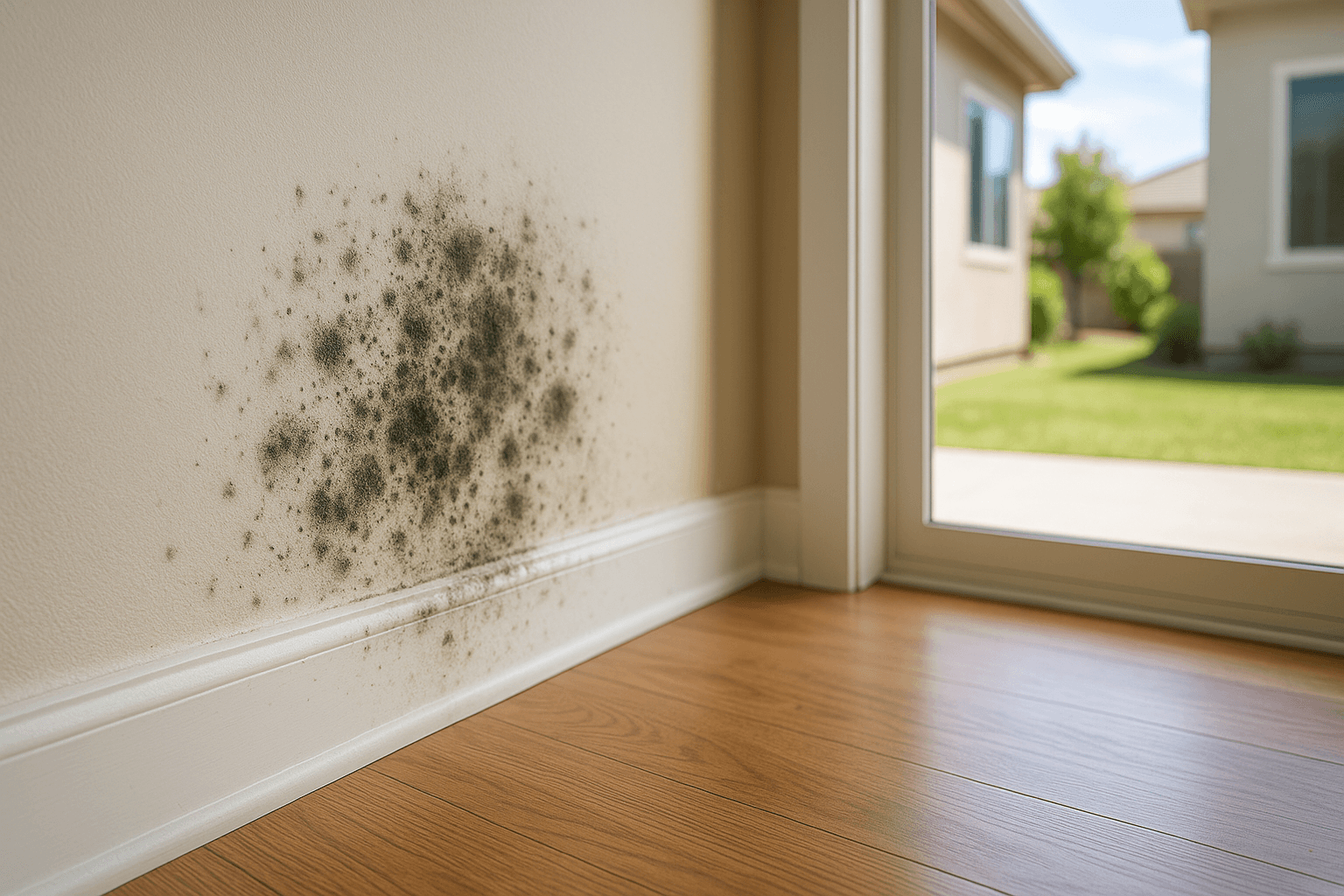
The monsoon passed and the floor finally dried, so you assumed the danger was over. But in the days after East Valley flooding, mold can already be growing inside the walls, even in Arizona's dry desert air. Monsoon water hides where you can't see it.
This guide shows homeowners in Mesa, Chandler, and Gilbert how to handle post-monsoon mold: how fast it forms, what to remove, how to dry out for good, the health risks, and when the job is past a DIY cleanup.
Key Takeaways
- Mold can start within 24 to 48 hours of monsoon flooding, so the first two days decide how bad it gets.
- Dry desert air helps, but monsoon-soaked wall cavities, slabs, and swamp coolers still grow hidden mold.
- Porous materials that soaked up floodwater usually have to be removed, not dried out.
How Fast Mold Grows After Monsoon Flooding
Mold spores germinate within 24 to 48 hours of water exposure, with visible colonies in 1 to 12 days. After an East Valley monsoon flood, the clock starts the moment water gets in. Even though Arizona's ambient air is dry, soaked drywall and slab moisture hold water long enough to feed mold deep inside Mesa and Gilbert walls.
Dry Water-Damaged Areas Fast
Drying is what stops mold. Per theEPA's guidance on drying water-damaged areas, aim to dry everything within 24 to 48 hours. Run air movers and dehumidifiers on the studs, subfloor, and concrete. Don't rely on Arizona's dry air alone, because trapped moisture in wall cavities and under flooring needs mechanical drying to clear.
Remove Soaked Materials
Porous materials that absorbed floodwater rarely clean up safely. Discard wet insulation, carpet and padding, and soaked drywall. For walls, crews perform a flood cut, removing drywall a foot or two above the high-water line to open the cavity for drying. Hard, non-porous surfaces like tile and metal can usually be cleaned and kept.
Clean and Disinfect Surfaces
Once materials are dry, clean salvageable hard surfaces to remove residue, then disinfect to kill lingering spores. Wash walls and items that touched floodwater, disinfect with an appropriate solution, and wipe surfaces dry. Don't forget swamp coolers and HVAC ducts, which hold post-monsoon moisture and can spread spores through an East Valley home.
The Health Risks of Monsoon Mold
Mold after flooding is a health issue, not just a property one. PerCDC mold guidance, exposure can trigger congestion, wheezing, and itchy eyes, with stronger effects for children, older adults, and people with asthma. Watch for symptoms that ease when you leave the house, a common sign mold is active inside.
When to Call a Mold Pro
DIY can handle a small, clean-water spill you dried fast. Call a professional when monsoon water was contaminated, the area is large, mold covers more than about 10 square feet, it grew on drywall or framing, or anyone has symptoms. Restoration crews find hidden moisture, contain the area so spores don't spread, remove affected materials, and dry the structure to a safe level.
Frequently Asked Questions
How soon does mold grow after monsoon flooding?
Mold can begin within 24 to 48 hours, with visible colonies in 1 to 12 days. The first 24 to 48 hours are the critical window to dry everything out.
Can mold grow in a home in dry Arizona?
Yes. Monsoon-soaked wall cavities, slabs, and swamp coolers hold moisture long enough to grow hidden mold, even when the indoor air feels dry.
What should I remove after a monsoon flood?
Discard soaked porous materials like wet drywall, insulation, and carpet padding. Hard, non-porous surfaces can usually be cleaned, disinfected, and kept.
Is post-monsoon mold dangerous?
It can be. Mold can cause congestion, wheezing, and worsening allergies, with the strongest effects on children, older adults, and people with asthma.
Mold After the Monsoon in the East Valley?
A musty smell or a spreading stain after monsoon flooding means mold is likely already working behind the surface. In the East Valley, surface cleanup rarely reaches the moisture hiding in walls, slabs, and coolers.
Ourmold remediation team at RestoPros of The East Valleyfinds the hidden moisture monsoon flooding leaves behind in Mesa, Chandler, and Gilbert homes, contains and removes the mold safely, and dries the structure so it doesn't return. Acting in the first days protects your home and your family's health.
Find local crews and response details on our Mesa, Chandler, and Gilbert restoration pages.