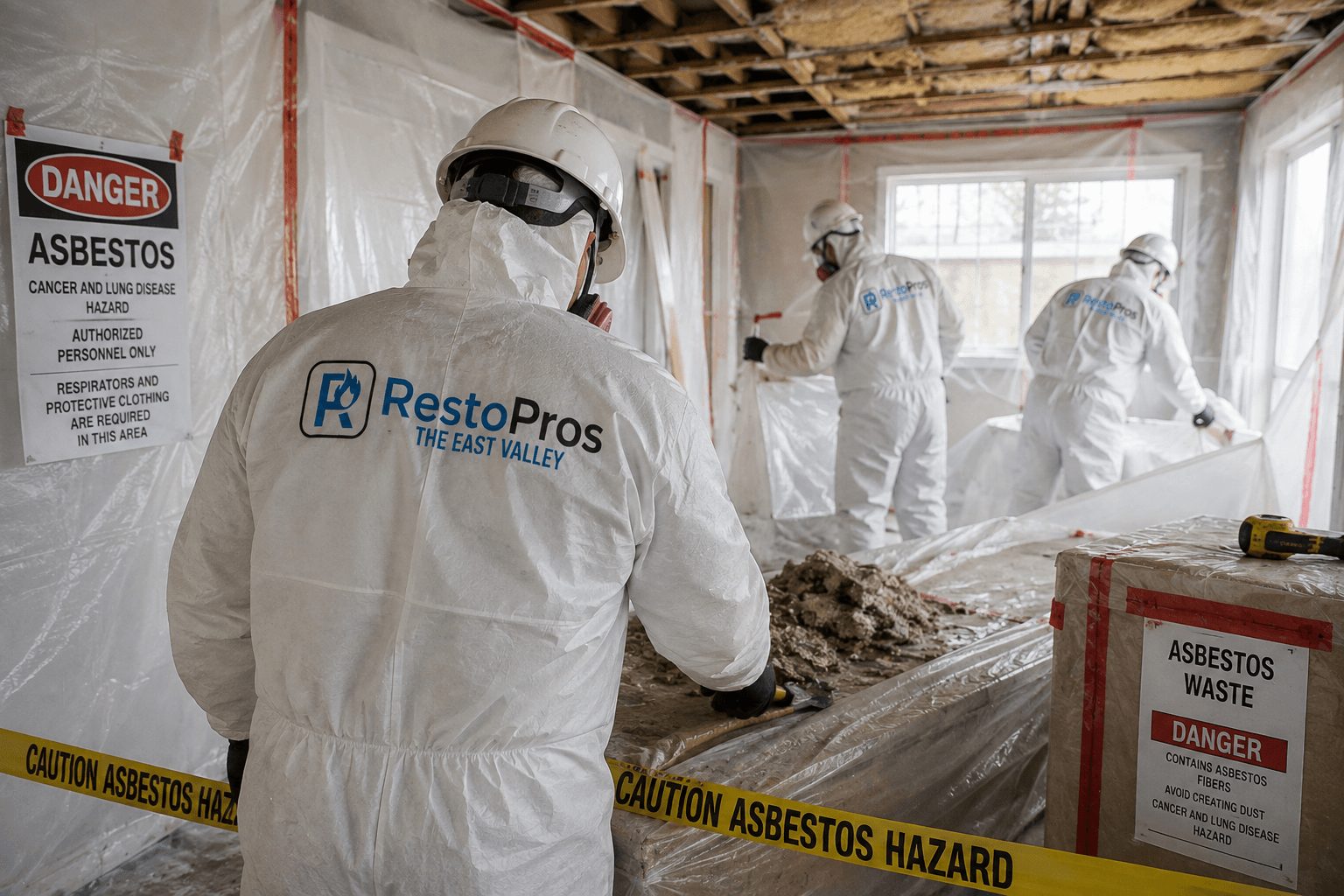
Chandler is different from Mesa or Tempe when it comes to asbestos risk: build year actually tells you a great deal. Asbestos-containing materials were common in construction through roughly the late 1980s, with some products used into the mid-1990s. A large portion of Chandler was built after that window closed — the big master-planned subdivisions in Ocotillo, Fulton Ranch, and Sun Groves are predominantly 2000s construction and are not a concern. If your home was built after 1995, asbestos is very unlikely and testing is generally not necessary.
The homes that do fall inside the window sit in north Chandler and the neighborhoods developed between roughly 1978 and 1995, the historic downtown core, and Sun Lakes — the established community just south of Chandler proper that dates to the early 1970s. In those homes, joint compound, vinyl floor tile, popcorn ceiling texture, and pipe insulation are all worth testing before any demolition begins. The materials themselves are not dangerous sitting undisturbed behind paint or under carpet. The moment of risk is renovation, repair, or disaster — when something has to come out.
The combination that turns up most often in north Chandler restoration jobs is what makes this worth explaining carefully: polybutylene supply pipe and potentially asbestos-containing materials in the same home. Homes built between 1978 and roughly 1995 frequently have both. Polybutylene pipe — the gray flexible supply line marked PB2110 — fails as a sudden burst rather than a slow drip, and a burst inside a wall creates an emergency that cannot wait. But the emergency demolition means cutting into drywall that may contain asbestos. You cannot simply stop and wait a week for lab results while a house sits wet. Understanding how that sequencing actually works is the most useful thing we can tell a Chandler homeowner.