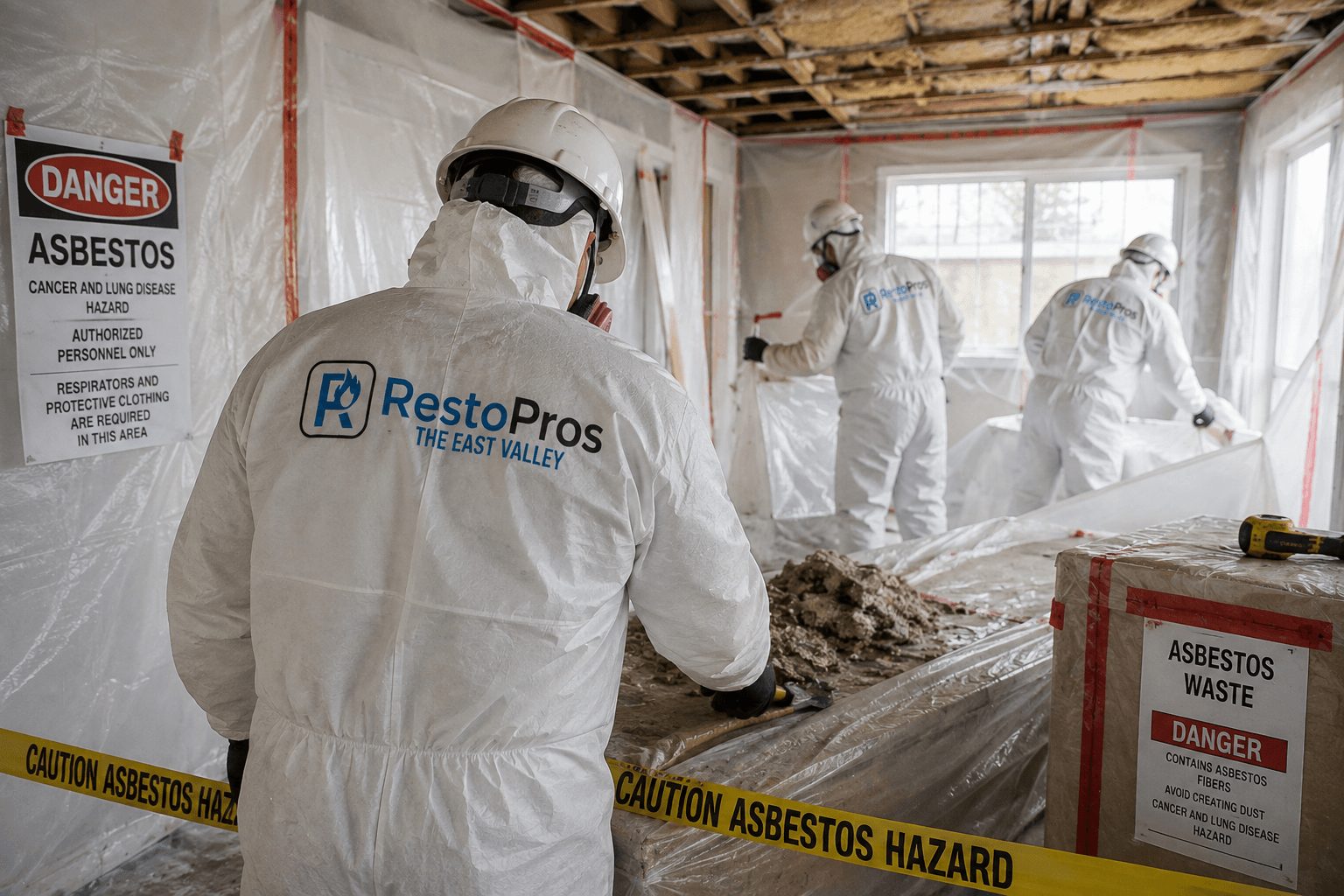
Cost is driven by material type, square footage, how accessible it is, and the containment level required. Removing vinyl floor tile from an open room is comparatively straightforward; abating popcorn ceiling across a whole house, or pipe insulation in a tight attic, takes considerably more containment and labor. Testing itself is a modest, separate cost and is always worth it — the alternative is either paying for unnecessary abatement or, far worse, contaminating your home during a demo you assumed was safe.
Arizona regulates asbestos work through ADEQ alongside federal NESHAP rules, and requirements scale with project size and building type. Homeowners doing work in their own single-family residence have more latitude than contractors do, but that latitude does not make DIY removal safe — it just makes it legal. Commercial and multi-family projects carry stricter notification and licensing obligations, which we manage.
On insurance: asbestos abatement is generally not covered as a standalone problem, since an existing material in your home isn't a sudden peril. It often is covered, however, when abatement becomes necessary as part of a covered loss — a burst pipe or fire that damages asbestos-containing material and forces its removal to complete the repair. We document that connection carefully, because how the abatement is tied to the covered damage determines whether it's paid.