
Smoke Damage Restoration in the East Valley, AZ: Soot, Odor & HVAC Cleanup, 24/7
Smoke damage doesn't need a big fire. A kitchen flare-up, a fire in the unit next door, a fireplace that backdrafted, or years of tobacco smoke can leave residue on every surface and an odor that comes back every time the AC kicks on. RestoPros of the East Valley cleans soot, removes smoke odor at the source, and restores HVAC systems and contents for homes and businesses in Mesa, Gilbert, Chandler, Tempe, Queen Creek, and Apache Junction. Free inspection, direct insurance billing, and crews that typically arrive in 60 to 90 minutes.
Most smoke damage calls we take aren't total-loss fires. They're the kitchen fire that the extinguisher put out in thirty seconds, the condo that shares an attic with the unit that burned, or the rental where a tenant smoked indoors for years. The flames were small or absent, but the smoke reached everywhere air could go: into wall cavities, through ductwork, into carpet pad, clothing, and cabinets. In East Valley homes that stay closed up and air-conditioned for much of the year, the HVAC system keeps recirculating that residue and odor through every room. Smoke damage restoration is the specialized work of finding all of it, cleaning what can be cleaned, replacing what can't, and neutralizing odor so it doesn't return on the first hot day.
Smoke Damage Without a Fire in Your Home
You can have a real smoke damage claim even if nothing in your home burned. In attached housing, smoke from a neighboring unit travels through shared walls, attics, and plumbing chases. In single-family homes, a stovetop fire that's out in a minute still sends grease-laden protein smoke through the whole kitchen and into the return air vents. Fireplaces and wood stoves that backdraft leave a fine soot film across living areas.
The residue matters more than the smell. Smoke residue is acidic and keeps working after the fire is out: it discolors paint and grout, tarnishes metal fixtures, and yellows plastics and appliances the longer it sits. Odor molecules settle into porous materials like drywall, insulation, and upholstery, which is why air fresheners and open windows don't solve it. Restoration follows the ANSI/IICRC S700 standard for fire and smoke damage, which treats residue identification and source removal as the core of the job, not masking the smell.
Why Smoke Damage Gets Worse the Longer It Sits
Smoke damage is easiest and cheapest to fix in the first few days. Waiting tends to turn a cleaning job into a replacement job:
- check_circleAcidic residue etches and permanently stains surfaces that would have cleaned up if treated early.
- check_circleEvery HVAC cycle spreads soot and odor further through the ductwork and into rooms the smoke never reached.
- check_circleOdor bonds deeper into porous materials, so more drywall, insulation, and flooring ends up being removed.
- check_circleInsurers expect prompt mitigation; documented early action keeps your claim clean.
Signs Your Home Has Smoke Damage
Some smoke damage is obvious. Much of it isn't, especially when the fire was small or in a neighboring unit. Look for:
Odor that returns when the AC runs
If the smell fades with windows open but comes back when the system cycles, residue is sitting in the ductwork or air handler.
Yellow or gray film on walls and ceilings
A dingy film that wipes off on a white cloth, or a ceiling that looks darker around the light fixtures, is smoke residue.
Dark streaks around vents and outlets
Soot follows air movement, so it collects around supply registers, return grilles, outlet covers, and the tops of doors.
Black webs in corners
Soot tags, the stringy black webs in upper corners, form when fine soot particles cling together. They smear badly if wiped.
Discolored fixtures and grout
Tarnished faucets and hardware, yellowed plastics and appliance faces, and darkened grout lines all point to acidic residue.
Our Smoke Damage Restoration Services
Every smoke job starts with identifying the residue type, because dry, wet, protein, and fuel residues each need different cleaning chemistry. From there we clean, deodorize, and rebuild only what's needed.
Soot & Smoke Residue Cleaning
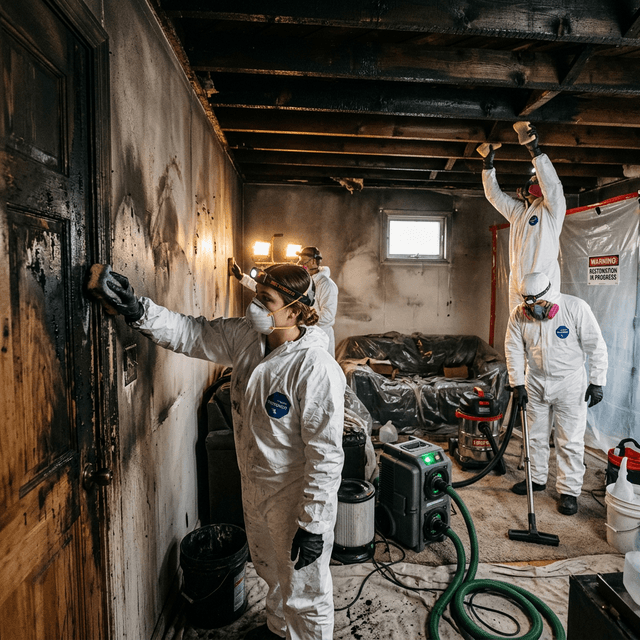
Dry sponging, HEPA vacuuming, and residue-specific cleaners for walls, ceilings, cabinets, and fixtures, worked top-down so residue isn't smeared deeper into paint and texture.
Smoke Odor Removal
Source removal first, then thermal fogging, hydroxyl generators that can run while you're home, or ozone treatment in unoccupied spaces, depending on the residue and the building.
HVAC & Duct Cleaning
Smoke rides the return air into ducts, coils, and filters. We clean the system so it stops redistributing odor and soot every time the AC runs.
Contents Cleaning & Pack-Out
Clothing, furniture, electronics, and keepsakes inventoried, cleaned, and deodorized off-site or on-site, with an itemized list for your insurance claim.
Sealing & Encapsulation
Framing and surfaces that are cleaned but still hold odor get sealed with odor-blocking primer before repainting, so the smell doesn't bleed back through.
Drywall, Insulation & Finish Repairs
When residue has penetrated too far to clean, we remove and replace the affected drywall, insulation, and flooring, then match textures and paint.
Our Smoke Damage Restoration Process
The order matters. Cleaning before the source is removed, or deodorizing before residue is cleaned, wastes time and money and leaves the odor behind.
Step 1: 24/7 Response & Inspection
Call (520) 482-3900 any hour. We inspect every affected area, including attics, ductwork, and adjoining rooms, and identify the residue types present.
Step 2: Scope & Documentation
A written scope with photos separates what can be cleaned from what must be replaced. It's built for your adjuster, and for HOAs and landlords when more than one party is involved.
Step 3: Contents & Source Removal
Contents are packed out or protected, and materials too damaged to clean are removed so they stop releasing odor.
Step 4: Residue Cleaning, Top-Down
Ceilings, walls, cabinets, fixtures, and floors are cleaned with methods matched to each residue type, followed by HVAC and duct cleaning.
Step 5: Deodorization
Thermal fogging, hydroxyl, or ozone treatment neutralizes the odor molecules left in porous materials, then surfaces that still hold odor are sealed.
Step 6: Repairs & Final Walkthrough
Drywall, insulation, paint, and flooring are restored, contents are returned, and we walk the property with you to confirm the odor is gone.
Why Choose Us
Smoke damage is easy to underclean. These are the reasons East Valley homeowners, landlords, and business owners call us for it.
IICRC-Certified Technicians
Our crews follow IICRC fire and smoke restoration standards, from residue testing to deodorization.
24/7, Typically 60 to 90 Minutes
Based in Tempe and on call around the clock for Mesa, Gilbert, Chandler, Queen Creek, and Apache Junction.
Direct Insurance Billing
Photo documentation, itemized scopes, and contents inventories your adjuster can approve without back-and-forth.
Cleaning Through Rebuild
One team handles smoke cleanup, odor removal, and any reconstruction, so nothing falls between contractors.
Smoke Damage We Restore Across the East Valley
Smoke restoration covers far more than house fires. We regularly handle:
- check_circleKitchen and stovetop fires, including protein smoke from burnt food and grease
- check_circleSmoke that migrated from a neighboring condo, townhome, or apartment unit
- check_circleFireplace and wood stove backdrafts that left soot across living areas
- check_circleGarage, electrical, and appliance fires that sent smoke into the main house
- check_circleWildfire smoke that entered through attic vents and the HVAC system
- check_circleTobacco and cannabis smoke odor in rentals, flips, and newly purchased homes
- check_circleRestaurant and commercial kitchen hood fires
Fire & Smoke Damage Restoration by City
Local response details and city-specific fire and smoke recovery:
- location_onFire & Smoke Damage Restoration in Gilbert, AZ
- location_onFire & Smoke Damage Restoration in Chandler, AZ
- location_onFire & Smoke Damage Restoration in Mesa, AZ
- location_onFire & Smoke Damage Restoration in Tempe, AZ
- location_onFire Damage Restoration Across the East Valley
- location_onHow to Get Smoke Smell Out of a House
FAQ
Smoke damage from a sudden fire is typically covered under the fire peril of a standard homeowners policy, including smoke that came from a neighbor's fire. Long-term tobacco smoke is generally not covered, because it's gradual rather than sudden. Coverage for wildfire smoke varies by policy. We document the damage with photos and itemized scopes and bill your carrier directly on covered claims.
Often, yes. Smoke travels through shared walls, attics, and ventilation in condos, townhomes, and apartments, and through open windows and attic vents in single-family homes. If you notice odor, a film on surfaces, or soot around vents, get an inspection. It's free, and the documentation supports a claim under your own policy.
Light, dry soot on hard surfaces can sometimes be handled with a dry chemical sponge. Wiping with water or all-purpose cleaners usually smears residue deeper into paint and texture, and it does nothing for odor in drywall, insulation, or ductwork. If the smell persists after a few days or returns when the AC runs, professional cleaning is needed.
A single-room kitchen fire cleanup is often finished in a few days. Whole-home smoke damage with contents cleaning, duct cleaning, and repairs can take one to several weeks. We give you a written timeline with the scope.
Ozone is effective on smoke odor but is not safe to breathe, so it's only used in unoccupied spaces with people and pets out, followed by airing out before re-entry. When you need to stay in the home, we use hydroxyl generators instead, which can run safely while the space is occupied.
Not if the source is removed. Smell returns when residue is left in ductwork, insulation, or framing, or when deodorizers only mask it. That's why we clean the HVAC system, remove materials that can't be cleaned, and seal framing before repainting.
Smoke Damage? Get a Free Inspection Today
Call RestoPros of the East Valley at (520) 482-3900 for 24/7 smoke damage restoration in Mesa, Gilbert, Chandler, Tempe, Queen Creek, and Apache Junction. We'll identify the residue, scope what can be cleaned versus replaced, and bill your insurance directly.