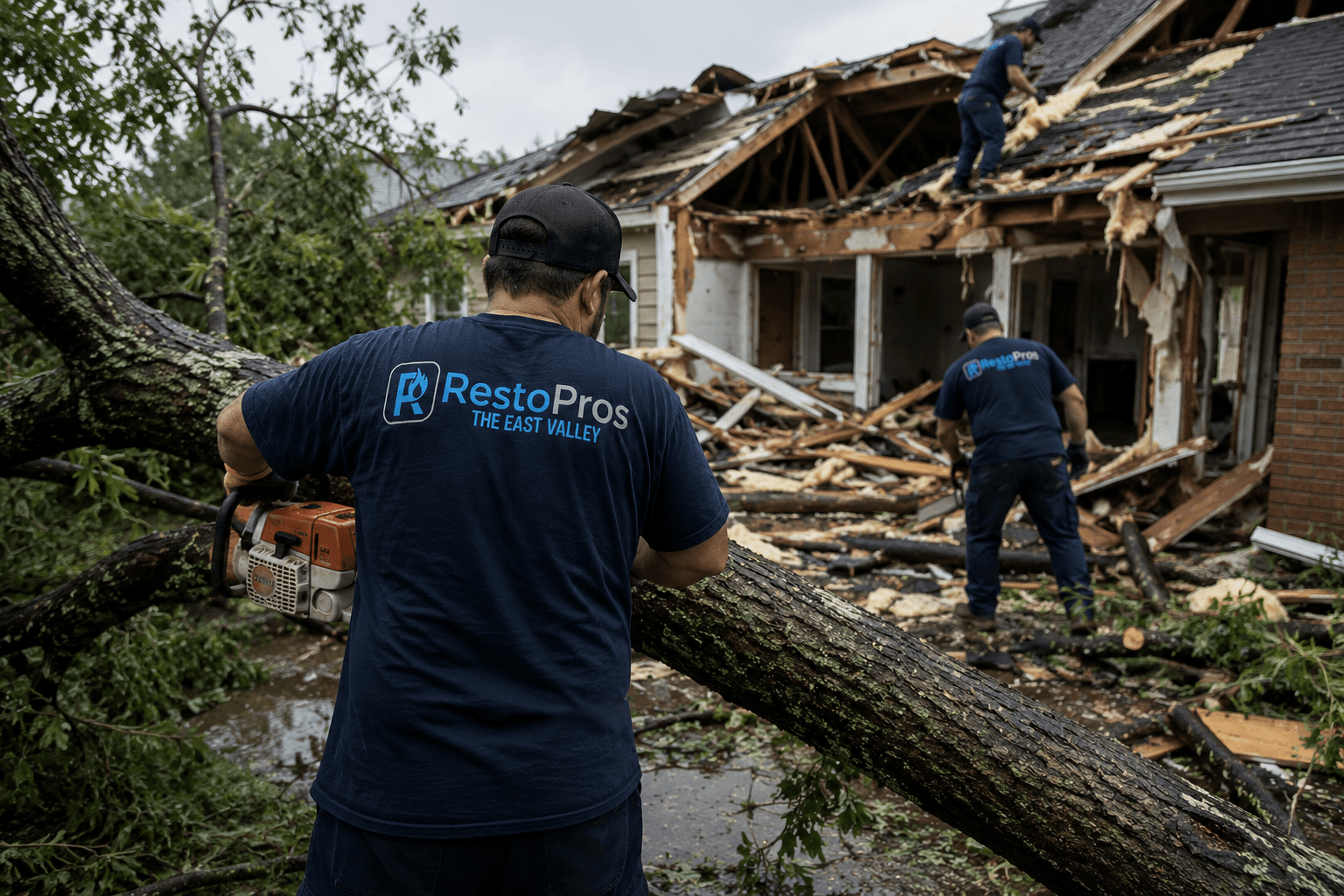
The most important cost variable in a Gilbert storm job is how long water entered the structure before it was stopped. A tile displaced at 8 p.m. and tarped by 10 p.m. typically means damp insulation and a modest dry-out. The same opening left until morning — through a second cell, into a heated attic, down through a two-story ceiling assembly — can mean saturated insulation removal, ceiling drywall replacement on two levels, and mold prevention work. Time-to-tarp is the lever that matters most. The secondary variable is whether storm water came in through the roof, through openings, or from ground-level drainage, because those follow different insurance paths and require different remediation protocols.
Gilbert produces a coverage problem that most of the Valley doesn't, and it comes from the lake communities. In Val Vista Lakes or The Islands, one monsoon afternoon can damage a house from two directions at once: wind opens the roof from above while the neighborhood's stormwater system is overwhelmed and water arrives across the landscape from below. Those are two different claims. The roof-path water is a wind loss your homeowner's policy generally handles; the ground-path water is a flood loss it generally won't, and that one needs separate flood insurance. Because both sets of damage end up in the same rooms, an adjuster reading a single combined scope has no way to tell which is which — and the usual outcome is partial denial. We photograph, measure and write them up as two separate causes from the first visit, which is the difference between two claims paying and one claim being argued.
Cost varies with the scope of each job, and we don't quote numbers before inspecting — what looks like a tarp job from the driveway sometimes opens into a full ceiling rebuild, and what sounds catastrophic over the phone sometimes resolves to a contained area. What we can tell you before any work begins is exactly what we found, what it will take to fix it, and what the line-item scope says. Inspection is free, the estimate is written, and covered mitigation is billed directly to your carrier.