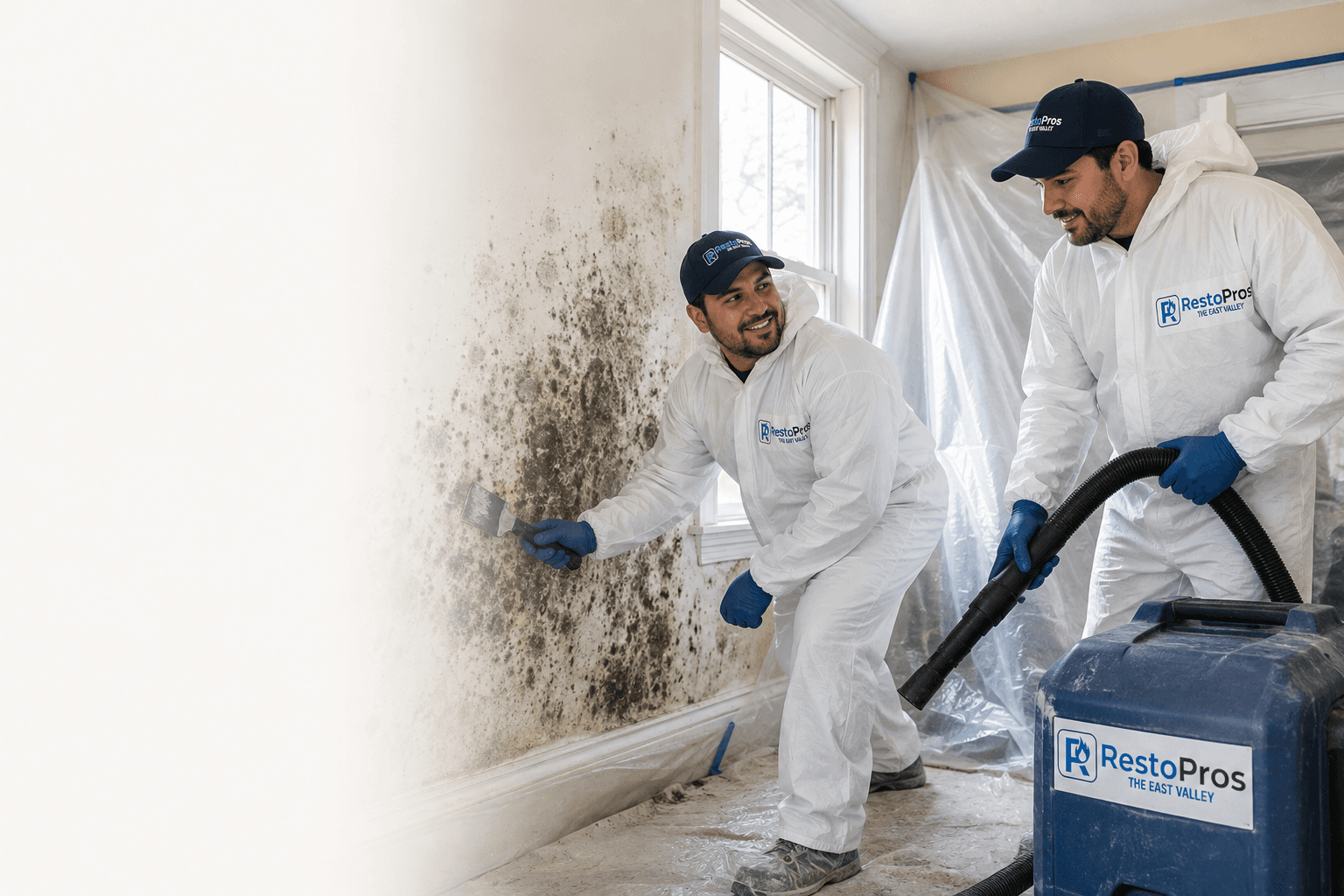
The distinction between a clean-water mold job and a contaminated-water mold job is not a technicality — it determines what can stay and what has to come out. When a supply line fails behind a wall, the water is clean, porous materials that got wet can often be dried and treated in place, and the decision is made by moisture levels and timing. When the Queen Creek Wash backs up or a monsoon cell drops enough water to push through a garage, the water carrying that moisture into your home has been in the ground, in street runoff, and against your foundation. Every porous material it soaked — drywall, framing insulation, subfloor — must be removed, not dried in place. Attempting to dry contaminated porous materials rather than removing them doesn't fix the mold problem; it preserves the contamination and the conditions that make mold inevitable.
Queen Creek and San Tan Valley also sit at the edge of where the grid ends and larger-lot, working-land properties begin. Septic systems are common in the outlying parcels east of Ellsworth Road, and a septic field failure or sewage backup is its own contaminated-water event with its own handling requirements. Tack rooms, workshops, barns, and detached garages on horse properties often go years without a proper moisture inspection. Those structures are unconditioned and uninsulated, so humidity swings are wide, and a damp corner in a hay storage room or tack area can grow a colony long before anyone notices. We inspect outbuildings and schedule work around animals.
The newer construction that fills Cortina, Montelena, Harvest, and the Ellsworth Loop corridor brings a third category: homes still under builder warranty where a construction defect caused the moisture intrusion. If a flashing detail, grading issue, or plumbing rough-in is the root cause, you may have both an insurance claim and a warranty claim running in parallel, and documenting them correctly from the start matters. We write scopes that support both conversations without conflating them.