
A monsoon storm soaked your Mesa garage last August. You towel-dried the floor, ran a fan for a day, and figured you caught it. Six months later, a musty smell appears in the back bedroom. The next question every East Valley homeowner asks: do I have hidden mold?
This guide covers the 7 warning signs of mold after water damage in Mesa, why monsoon season changes the mold timeline, and when to call a remediation professional. If you have already spotted obvious mold, our Mold Remediation page walks through the full inspection-to-clearance process.
Key Takeaways
- Mesa dry climate normally slows mold to 48-72 hours, but monsoon humidity compresses the window back to the standard 24-48 hours.
- AC condensate failures are the #1 hidden mold source in East Valley homes — more common than slab leaks or roof issues.
- A musty smell appearing months after a water event almost always means hidden mold has established.
7 Warning Signs of Mold After Water Damage in Mesa
1. Persistent Musty Smell
Most reliable early indicator. Damp, earthy odor that does not clear with cleaning. Often appears 1-2 weeks before any visible growth. Check basements, closets, behind appliances, and around HVAC vents.
2. Visible Discoloration on Walls or Ceilings
Yellow, tan, brown, or grey patches — especially around windows, baseboards, or near plumbing fixtures. Black or dark green spots indicate established colonies. Color and pattern help identify mold species.
3. Allergy Symptoms That Improve Outside
Per CDC research, mold spores trigger congestion, headaches, sore throat, sinus pressure. The tell: symptoms get worse indoors and improve when you leave the house. If your family has been feeling worse at home for weeks after a water event, hidden mold is a leading suspect.
4. Bubbling Paint or Warped Drywall
Paint that bubbles outward, wallpaper that peels, or drywall that visibly warps signals trapped moisture and microbial activity behind the surface.
5. Recent Water Event in Past 12-24 Months
Any water intrusion in the past 1-2 years should trigger a mold check — even if cleanup seemed complete. Hidden mold from past damage often takes 6-12 months to become visible or smelly.
6. AC Condensate Stains or Drip Pan Issues
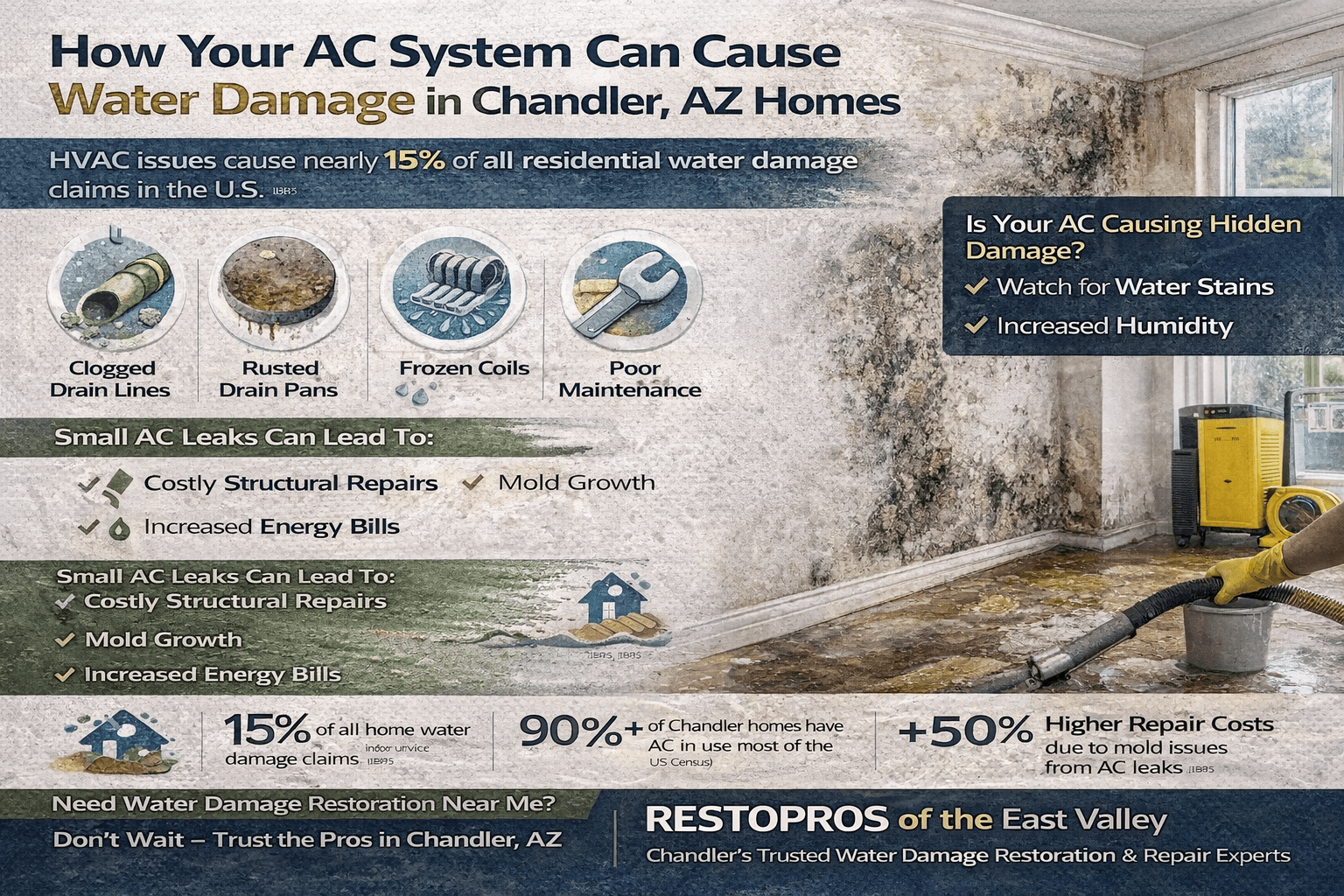
Mesa-specific. Inspect AC drip pans, condensate lines, and the area below interior air handlers. Yellowed ceiling drywall below an air handler usually means hidden mold from condensate drainage failure.
7. Crawl Space or Attic Visual Inspection Issues
Older Mesa homes (Lehi, Citrus Park, Sunland) often have shallow crawlspaces with limited ventilation. Visible discoloration on framing, insulation, or vapor barrier in these areas indicates active mold.
The Mesa Mold Timeline
Per NWS Phoenix climate data, East Valley averages 36% humidity year-round — much lower than humid markets. Mold colonization slows to 48-72 hours typically (vs the 24-48 hour national norm). However, monsoon season (June-September) brings 60%+ humidity events that compress the window back to 24-36 hours.
What it means: water events outside monsoon season give you more time. Water events during monsoon are urgent. Either way, 24-48 hours is the prevention window.
AC Condensate: Mesa's #1 Hidden Mold Source
East Valley homes run AC 6-9 months per year. The condensate drain pan + line system fails 8-12% of the time over 10 years. When it fails, water drips slowly into ceiling drywall or down interior walls. By the time you see the stain, hidden mold has already established.
Annual AC inspection ($75-$150) catches condensate issues before they become mold problems. Worth scheduling every spring before AC season begins.
When to Call a Mesa Mold Remediation Pro
Per EPA guidance, any contiguous mold area larger than 10 sqft requires professional remediation. Other triggers: family with asthma/allergies showing symptoms, mold inside HVAC ductwork, mold from sewage or floodwater (Cat 3), or recurring mold after DIY cleanup attempts.
How do I tell if I have mold after water damage?
Watch for musty smell, wall discoloration, allergy symptoms that improve outside, bubbling paint, and any signs in areas affected by past water events. A $300-$600 professional inspection confirms or rules out mold definitively.
Is mold a problem in Arizona homes?
Less than humid climates but more than commonly assumed. AC condensate, slab leaks, and monsoon roof penetrations are the dominant Arizona mold sources. East Valley humidity stays low year-round but spikes during monsoon and inside poorly ventilated spaces.
How long does it take for mold to show up after water damage?
Microscopic colonies form in 24-72 hours (faster during monsoon). Visible growth typically appears 7-21 days later. Hidden mold inside walls or attic insulation can take 2-6 months to become detectable through smell or visible signs.
What time of year is worst for mold in Mesa?
July-September monsoon season. Higher humidity + sudden rainfall events + elevated indoor moisture from AC strain create peak mold conditions. Inspections done in October catch issues from summer water events.
Suspect Mold After Mesa Water Damage?
A $300-$600 professional inspection is the cheapest way to rule out hidden mold or catch it early. RestoPros of The East Valley serves Mesa, Gilbert, Chandler, Tempe, Queen Creek, and Apache Junction with IICRC-certified inspections + remediation. Visit our mold remediation page for a free assessment.
Mesa homeowners can find local response details on our Mesa, AZ restoration services page — and if you've spotted something dark and aren't sure what it is, our guide to what black mold looks like can help you identify it.