
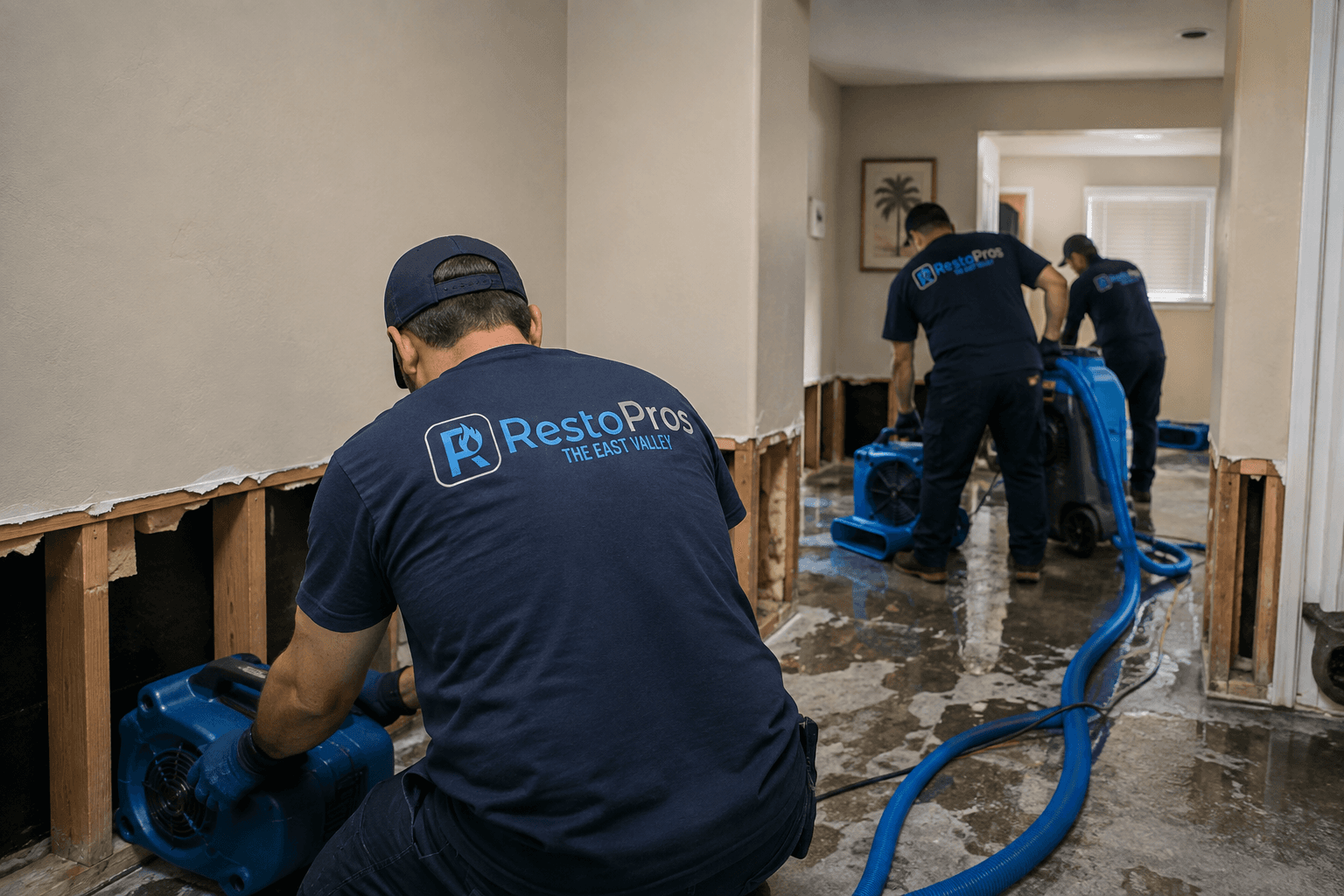
We tell homeowners the truth even when it costs us work: plenty of small water events are safe to handle yourself. This is the exception, stated plainly. Sewage backing up through your drains is Category 3 water — the industry's designation for grossly contaminated water carrying bacteria, viruses, and parasites — and the difference between it and a burst supply line isn't degree, it's kind. Clean water damages materials. Sewage contaminates them, and everything porous it touches.
Key Takeaways
- Sewage is Category 3 ('black') water: treat every surface it touched as contaminated, and keep people and pets out of the area.
- Don't run fans, don't shop-vac it, and don't run the HVAC — all three spread contamination, the first two as aerosol.
- Porous materials that absorbed sewage — carpet, pad, drywall, particleboard — are removed, not cleaned. That's the standard, not an upsell.
- Standard homeowner's policies exclude sewer backup; the endorsement that covers it costs little and is worth asking about today.
The First Hour: What to Do (and Not Do)
- Get people and pets away from the affected area, and keep foot traffic from crossing between contaminated and clean zones — shoes are how backups tour a house.
- Stop adding water to the system: no flushing, no showers, no laundry, no dishwasher until the blockage is understood. Every drain in the house feeds the same line.
- Kill power to affected rooms at the breaker if water is near outlets or appliances.
- Do NOT run fans or the AC/heat. Air movement aerosolizes contaminated moisture and gives it a ride through the duct system to the rest of the house.
- Do NOT vacuum it with a shop-vac. The exhaust stream turns sewage into breathable mist — the single worst common DIY move on this job.
- Photograph the scene from clean ground, then call: a Category 3 crew, and your plumber or the city (more on which, below).
What Causes Sewage Backups in East Valley Homes
Tree roots in older neighborhoods
The mature, tree-lined streets of central Mesa and Tempe sit over clay and cast-iron sewer laterals from the 60s and 70s — and roots find every joint. Root intrusion narrows the line for months (slow drains, occasional gurgling) before a final blockage sends everything back up the lowest drain in the house, usually a shower or tub.
Grease and buildup
The slow-motion version: years of kitchen grease and buildup narrowing the lateral until one load of laundry is the last straw.
City main surcharges — especially during monsoons
When storm flow overwhelms a municipal main, pressure can push sewage backward into homes through their laterals — which is why backups cluster during exactly the August storms that are flooding yards at the same time. If neighbors are backing up simultaneously, call the city's sewer emergency line as well as your own help; the cause (your lateral versus their main) matters for both the fix and the claim.
Line collapses
Shifting desert soil and aging pipe eventually break laterals outright. A camera inspection after any serious backup tells you whether you had a clog or have a collapse — worth insisting on, because clearing a collapsed line is a repeat appointment.
Why Porous Materials Get Removed, Not Cleaned
This is the part of Category 3 work that surprises homeowners: the carpet looks rescuable. It isn't — and not because restoration companies like demolition. Carpet, pad, drywall that wicked contaminated water, particleboard cabinetry, and insulation absorb pathogen-laden moisture into structures that no surface treatment reaches. Industry standards (the IICRC S500, the same standard adjusters reference) call for removal and disposal of porous materials contaminated by Category 3 water precisely because 'cleaned' contaminated carpet is a biohazard with a fresh smell. Hard, non-porous surfaces — tile, concrete, sealed wood — are cleaned, disinfected, and verified instead.
How Professional Sewage Cleanup Actually Runs
- Containment first: plastic barriers and negative air with HEPA filtration so the affected zone stops sharing air with the rest of the house.
- Controlled extraction of sewage and contaminated water with equipment rated for it.
- Removal and bagged disposal of contaminated porous materials — flooring, pad, wicked drywall, affected contents.
- Cleaning and EPA-registered disinfection of every remaining surface, often multiple passes.
- Structural drying with daily moisture verification, because Category 3 plus dampness equals the fastest mold timeline there is.
- Reconstruction — new flooring, drywall, baseboards — so the space comes back finished, not just sanitized.
If you want the deeper background on how water categories work — and why category, not gallons, drives every decision on a job — our guide to clean, gray, and black water lays it out.
The Insurance Reality (Read This Before You Need It)
Standard homeowner's policies exclude sewer and drain backup. Coverage comes from a water backup endorsement — typically a modest annual cost for five figures of protection against exactly this event. If the backup traces to the city's main, a claim against the municipality is sometimes possible, but cities enjoy significant protections and slow timelines; the endorsement is the reliable path. Check your declarations page today — this is the single most commonly missing piece of coverage we see on East Valley losses. And regardless of coverage: document everything, keep receipts, and get the cause established by camera inspection.
Frequently Asked Questions
Can I clean up a small sewage spill myself?
A minor toilet overflow of clear bowl water onto sealed tile is manageable with gloves and disinfectant. Anything involving actual sewage across flooring, into carpet, or from a drain backup belongs with professionals — the hazard is biological, invisible, and airborne when disturbed.
How dangerous is sewage exposure, really?
Category 3 water carries bacteria (E. coli among them), viruses, and parasites; exposure routes include skin contact, splash, and aerosol inhalation. Children, pets, older adults, and anyone immunocompromised should stay entirely out of affected areas until cleanup and disinfection are verified.
Does the smell go away?
Yes — when the source material is properly removed and surfaces disinfected. Persistent odor after a 'cleaned' backup almost always means contaminated porous material was left in place, which is a redo, not a deodorizing problem.
How fast can you get here, and is it really 24/7?
Yes — sewage doesn't schedule. RestoPros responds across the East Valley 24/7, typically within 60–90 minutes, with Category 3 equipment on the truck. Call (520) 482-3900 and keep everyone out of the area until we arrive.
Sewage in the House? Make Two Calls, Touch Nothing
Call your plumber for the line — and call RestoPros of the East Valley at (520) 482-3900 for the contamination. Our water damage restoration team handles Category 3 cleanup to IICRC standards across Mesa, Tempe, and the entire East Valley — containment through reconstruction, with direct insurance billing where your endorsement applies.