
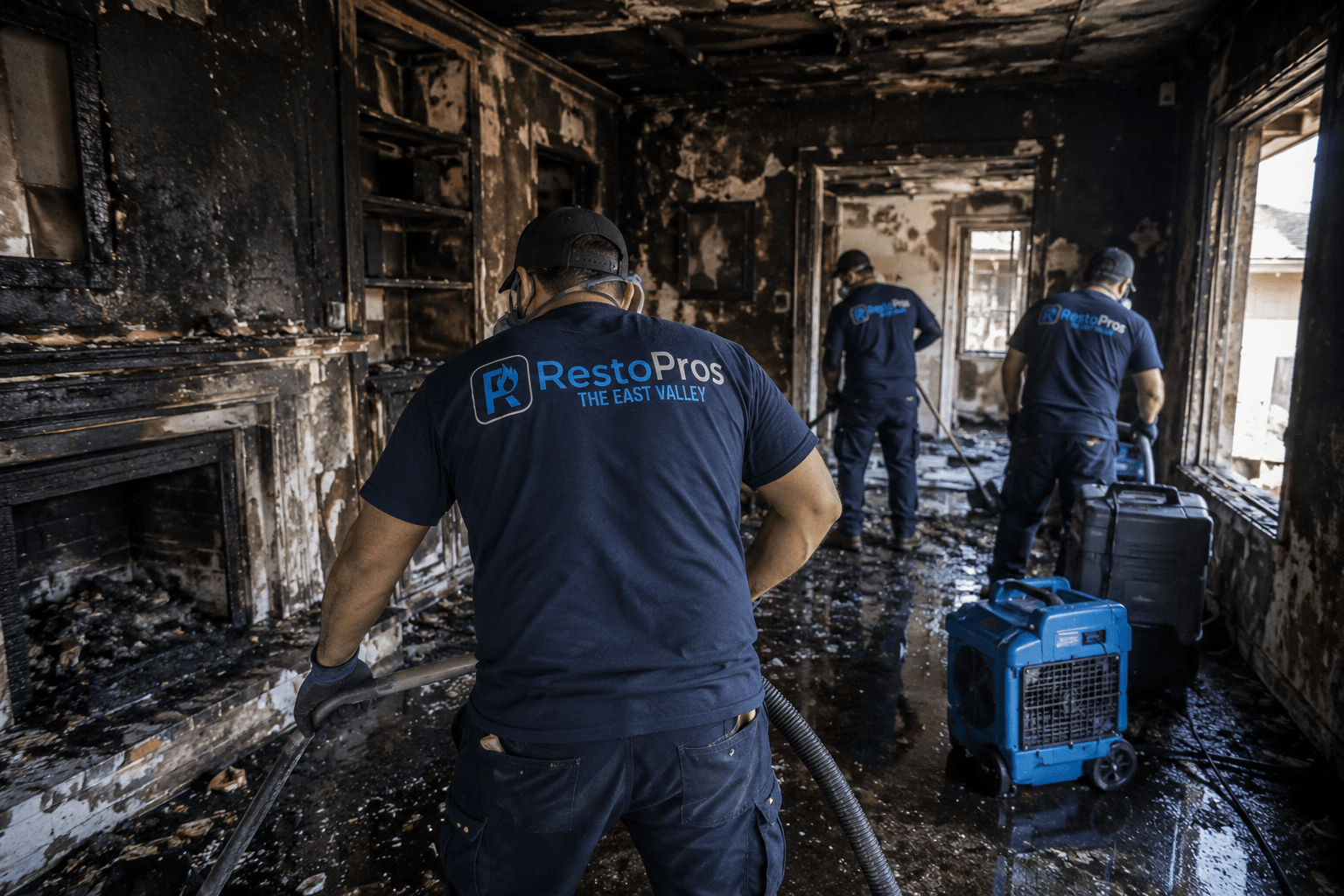
Here's what surprises almost everyone after a fire: the flames were only the first phase of the damage. From the moment the fire is out, the smoke residue it left behind keeps working — acidic films settle onto every surface, and within days they begin permanently etching glass, pitting metal, and yellowing finishes. Smoke damage cleaning is genuinely time-critical work, and it's chemistry before it's elbow grease. The wrong cleaning approach in the first hours — usually a well-intentioned homeowner with a wet sponge — turns recoverable damage into permanent damage.
Key Takeaways
- Smoke residue is acidic and keeps damaging surfaces after the fire: discoloration within hours, etched glass and corroded metal within days.
- There are four residue types — dry, wet, protein, and fuel — and each requires a different cleaning chemistry. Using the wrong one sets the damage.
- The classic mistake: wiping soot with water or all-purpose cleaner, which drives residue into surfaces and smears it permanently.
- Professional cleanup sequences the work — test, dry-clean, wet-clean, degrease, deodorize — and it's the sequence that saves your finishes and contents.
The Clock You Can't See: What Residue Does Over 72 Hours
Smoke residue is a blend of carbon particles and acidic combustion byproducts, and its damage timeline runs in stages. Within hours: porous materials (marble, grout, unsealed stone) begin discoloring, and plastics and appliances near the fire start yellowing. Within days: acids etch window glass with a permanent haze, tarnish and pit metal fixtures and hardware, and stain grout and countertops beyond cleaning. Within weeks: untreated residue works into wood finishes, corrodes electronics from the inside, and bonds with painted walls to a depth no cleaner reaches — replacement territory. This is why fire restoration crews do a fast 'pre-cleaning' pass on at-risk surfaces (glass, metal, stone, appliances) even before the full cleanup is scoped: it stops the acid clock on the things that can't be repainted.
Four Kinds of Smoke, Four Different Jobs
Dry smoke (fast, hot fires — paper, wood)
Leaves a dry, powdery soot that sits relatively loosely on surfaces. The good news: it responds well to dry-cleaning methods. The trap: touch it with water or a wet cloth and it smears into a stain that never fully leaves. Dry residue gets vacuumed and lifted with chemical sponges first — never wet-wiped.
Wet smoke (slow, smoldering fires — plastics, synthetics)
Low-heat smoldering — the couch cushion that never flamed, the electrical fire inside a wall — produces thick, greasy, smeary residue with a pungent odor that penetrates everything. It gums up chemical sponges and demands degreasing agents and patience. Most modern furnishings are synthetic, which makes wet smoke the most common residue in house fires today, and the hardest DIY case.
Protein smoke (kitchen fires — burnt food, grease)
The sneaky one. A protein fire can leave almost nothing visible — no black soot, just a faint amber film — while depositing an intensely rancid odor through the kitchen and HVAC. Homeowners scrub the stove area, find nothing else to clean, and can't understand why the house still smells. The film is on every cabinet face, wall, and ceiling in a wide radius, and it needs enzyme and degreasing chemistry plus deodorization to actually leave.
Fuel and fireplace residue
Furnace puff-backs and fireplace backdrafts distribute oily soot broadly but thinly. Less catastrophic, same rule: match the chemistry to the residue before touching anything.
Why DIY Smoke Cleaning Usually Makes It Worse
- Wet-wiping dry soot: drives carbon into paint and drywall texture, converting removable powder into permanent staining. The single most damage-multiplying move.
- All-purpose cleaners on acidic residue: wrong chemistry can react with residue or spread it; degreasers, enzymes, and alkaline cleaners each have their place — matched to the residue, not guessed.
- Scrubbing textured Arizona drywall: our knockdown and orange-peel textures hold soot in every crevice; aggressive scrubbing polishes residue in and destroys the texture. Sealed-and-repainted is often the correct answer, after proper cleaning.
- Running the HVAC 'to air it out': the return pulls residue-laden air through the system and redistributes it to clean rooms — and coats the ducts.
- Plugging in fire-adjacent electronics to 'see if they work': soot is conductive and corrosive; contaminated electronics need assessment before power.
How the Professional Sequence Runs
- Test first: residue type identified surface by surface — the same room can hold dry soot on one wall and protein film on another.
- Protect and pre-clean: at-risk surfaces (glass, metals, stone, appliances) get immediate attention to stop acid etching.
- Dry cleaning: HEPA vacuuming and chemical (dry) sponges lift the bulk of particulate without smearing — always before anything wet.
- Wet cleaning and degreasing: residue-matched agents on washable surfaces; enzyme treatment for protein films.
- Contents processing: furnishings, textiles, and salvageable items cleaned with appropriate methods — including ultrasonic cleaning for hard contents.
- HVAC cleaning: ducts, returns, and equipment that inhaled the smoke event.
- Deodorization: thermal fogging, ozone, or hydroxyl treatment to neutralize odor at the molecular level — after source removal, never instead of it.
- Sealing and refinishing: cleaned structural surfaces sealed with stain-blocking primer, then repainted, as the final lock on both stain and odor.
That deodorization phase is its own discipline — we've written a full guide to getting smoke smell out of a house, including what homeowners can do themselves on lighter odor problems.
The Insurance Side, Briefly
Fire and smoke damage — including smoke damage to areas the flames never reached — is covered by essentially every homeowner's policy, and adjusters expect professional cleaning and deodorization line items on fire claims. Two practical notes: document everything before cleanup begins (photos of residue on surfaces are evidence that vanishes as work proceeds), and have contents assessed item by item rather than accepting a blanket total-loss assumption — good contents cleaning saves things families assumed were gone, and the claim should reflect real salvage. We document to insurance standards and bill carriers directly on covered fire losses.
Frequently Asked Questions
Can smoke damage be cleaned, or does everything need replacing?
Most hard surfaces, many furnishings, and a surprising share of contents are recoverable — if the right chemistry reaches them before the acid damage sets and before anyone smears the residue. Delay and wrong-method cleaning are what turn cleanable into replaceable.
Is smoke residue dangerous to be around?
Soot particles and combustion byproducts are respiratory irritants and worse with prolonged exposure — keep kids, pets, and anyone with respiratory conditions out of affected areas, and leave the disturbance of residue (which re-airborines it) to crews with proper filtration and PPE.
The fire was small and contained — do I really need professional cleaning?
Depends on the smoke, not the flame. A tiny protein fire can odor-contaminate a whole floor; a small smoldering fire produces the worst residue there is. If smell or film extends beyond the immediate fire area, an assessment is worth it — ours is free.
How fast should smoke cleanup start?
Pre-cleaning of at-risk surfaces ideally within 24–72 hours — that's the etching window for glass, metal, and stone. Full cleanup follows scoping. We respond across the East Valley 24/7: (520) 482-3900.
Smoke Damage in the East Valley? Stop the Clock
RestoPros of the East Valley provides complete fire and smoke damage restoration across Mesa, Tempe, and the entire East Valley — residue testing, contents cleaning, deodorization, and rebuild, with direct insurance billing. If you're trying to work out the numbers first, see what fire damage restoration costs in Arizona. If the fire just happened, start with our house fire recovery plan and call (520) 482-3900.
For local response detail, see fire and smoke damage restoration in Mesa, AZ, in Gilbert, in Chandler, or in Tempe.