
Cooking is the leading cause of home fires in the United States, and the holiday season is when most of them happen. Most kitchen fires never make the news. A pan of oil gets too hot, a towel catches near a burner, or something left in the oven starts to smoke. Someone puts a lid on it or grabs the extinguisher, and the fire is out in under a minute.
Then the second problem starts. Grease smoke coats the cabinets with a sticky film, burned food leaves an odor that drifts into bedrooms and closets, and extinguisher powder settles across every surface in the room. This guide covers kitchen fire cleanup in the order it should happen, what you can handle yourself, and the signs that it needs a professional.
Key Takeaways
- Never put water on a grease fire. Turn off the heat and smother it with a lid, or use a fire extinguisher.
- Throw out food that was exposed to heat, smoke, soot or extinguisher chemicals, including food in an open pantry nearby.
- Grease and protein smoke leave sticky or nearly invisible films that smear when wiped wet, so dry cleaning comes first.
- Dry chemical extinguisher powder can corrode metal and electronics, so clean it up within a day or two.
- A kitchen fire is usually a covered sudden loss under homeowners insurance. Photograph everything before you clean.
If the Fire Is Still Burning
This guide is about the cleanup, but it is worth being clear on the first minute, because the wrong move turns a pan fire into a kitchen fire:
- Turn off the burner or oven if you can do it safely.
- Cover a burning pan with a metal lid or a baking sheet and leave it covered until it cools completely.
- Keep the oven or microwave door closed for an oven or microwave fire. Turn it off and let the fire starve.
- Never use water on a grease fire. It flashes to steam and throws burning oil across the room.
- Do not carry a burning pan outside or to the sink.
- If the fire spreads beyond the pan or you are not sure it is out, get everyone out and call 911.
The First Hour After the Fire Is Out
- Ventilate. Open windows and turn on the range hood if it was not damaged. Use a box fan in a window blowing out, not in the middle of the room.
- Turn off the HVAC system until the air clears, so smoke and powder are not pulled into the ductwork.
- Check for hidden heat. Feel the wall behind the stove and the cabinet above it. If anything is warm, smoking or smells of burning plastic, call the fire department.
- Photograph and video the stove, cabinets, ceiling, walls, appliances and any damaged items before cleaning anything.
- Call your insurance company if the damage goes beyond the pan itself.
What to Throw Away
Food safety guidance after a fire is simple: when in doubt, throw it out. Heat, smoke and soot can contaminate food in ways you cannot see or wash off.
- Anything that was on the stove, counter or in an open container in the kitchen.
- Food in permeable packaging such as cardboard, paper, or plastic bags, even if it looks fine.
- Food in the refrigerator if smoke got inside or it smells of smoke. Refrigerator seals are not airtight.
- Cans and jars that were exposed to high heat, are bulging, or are rusted from extinguisher chemicals.
- Food, utensils or cookware covered in extinguisher powder that cannot be fully washed.
- Plastic cutting boards, utensils and storage containers that warped or softened.
Medications stored in the kitchen should be replaced if they were exposed to heat or smoke. Ask your pharmacist if you are unsure.
Know Which Residue You Are Cleaning
Kitchen fires leave residues that behave differently from the dry soot of a wood fire. Using the wrong method is how a light cleanup becomes a repaint. Our guide to smoke damage cleaning after a fire covers residue types in depth. In a kitchen, these three are the common ones:
Grease Smoke
Burning cooking oil leaves a yellow to brown sticky film, heaviest on the range hood, the cabinet faces above the stove, and the ceiling directly overhead. It smears if you wipe it with a plain wet cloth. A degreasing cleaner is the right tool, used after loose soot has been removed.
Protein Residue
Burned meat, beans or other protein-rich food leaves an almost invisible amber film and an intense, lingering smell. It often looks like there is nothing to clean. The odor says otherwise, and it travels far beyond the kitchen into fabrics and closets. Protein residue usually needs enzyme or specialty cleaners and professional odor treatment.
Dry Soot From Plastics and Paper
A burned towel, plastic utensil or paper packaging can add black, oily soot that smears easily. It needs to be lifted with a dry chemical sponge before any wet cleaning.
Cleaning Up Fire Extinguisher Powder
Most home extinguishers are dry chemical units. The powder works well on fires, but it spreads widely, and the common multipurpose type can corrode metal and damage electronics when it absorbs moisture. Clean it up promptly, ideally within a day:
- Vacuum loose powder with a vacuum that has a HEPA filter, or the brush attachment of a shop vacuum. Avoid sweeping, which throws it back into the air.
- Wipe remaining residue from counters and appliance surfaces with a damp cloth. For hardened multipurpose powder, a mix of warm water and a little baking soda helps neutralize it.
- Wipe the inside of drawers and cabinets that were open during the fire.
- Rinse and dry any cookware that will be kept.
- Have the extinguisher recharged or replaced. A partly used unit should not stay on the wall.
Kitchen Fire Cleanup, Step by Step
For a small fire with light residue, this order keeps you from spreading the damage:
- Protect yourself. Wear nitrile gloves, eye protection and a disposable respirator rated for fine particles.
- Dry clean first. Use a dry chemical soot sponge to wipe walls, ceilings and cabinet faces in straight, overlapping strokes. Do not scrub, and do not use water yet.
- Degrease. Clean the range hood, backsplash and cabinets with a degreasing cleaner suited to the surface, working from the top down.
- Wash hard surfaces. Wipe counters, the stove and appliance exteriors, then rinse with clean water.
- Clean the range hood filter. Soak metal mesh filters in hot water with degreasing dish soap, or replace them.
- Launder fabrics. Wash curtains, towels and table linens in the kitchen and adjacent rooms. Some smoke odor may need more than one wash.
- Replace the HVAC filter once cleanup is done, and before running the system for long.
Test any cleaner on a hidden spot first, especially on painted cabinets, wood finishes and stone countertops, which can be etched or stained by harsh products.
Getting the Smoke Smell Out
Odor is often the longest-lasting part of a kitchen fire. Air fresheners and candles only mask it. Clean the residue first, then ventilate, launder fabrics, and wash walls if the smell persists. Our guide on how to get smoke smell out of a house covers what works at each level. If the odor is still there after a thorough cleaning, it has usually settled into drywall, cabinet interiors, insulation or ductwork, and needs professional deodorization such as thermal fogging or hydroxyl treatment.
When to Call a Professional
A pan fire with a little soot on the hood is often a DIY job. These signs mean it is bigger than that:
- Soot or residue reached rooms beyond the kitchen, or the HVAC was running during the fire.
- Cabinets, the range hood or the wall behind the stove are charred, blistered or warped.
- The smell is still strong after you have cleaned everything you can reach.
- Residue smears every time you wipe it, or cleaning is pulling the paint finish off.
- Electrical outlets, wiring or appliances near the stove were exposed to heat.
- Firefighters used water or the room got wet, which adds water damage to the smoke damage.
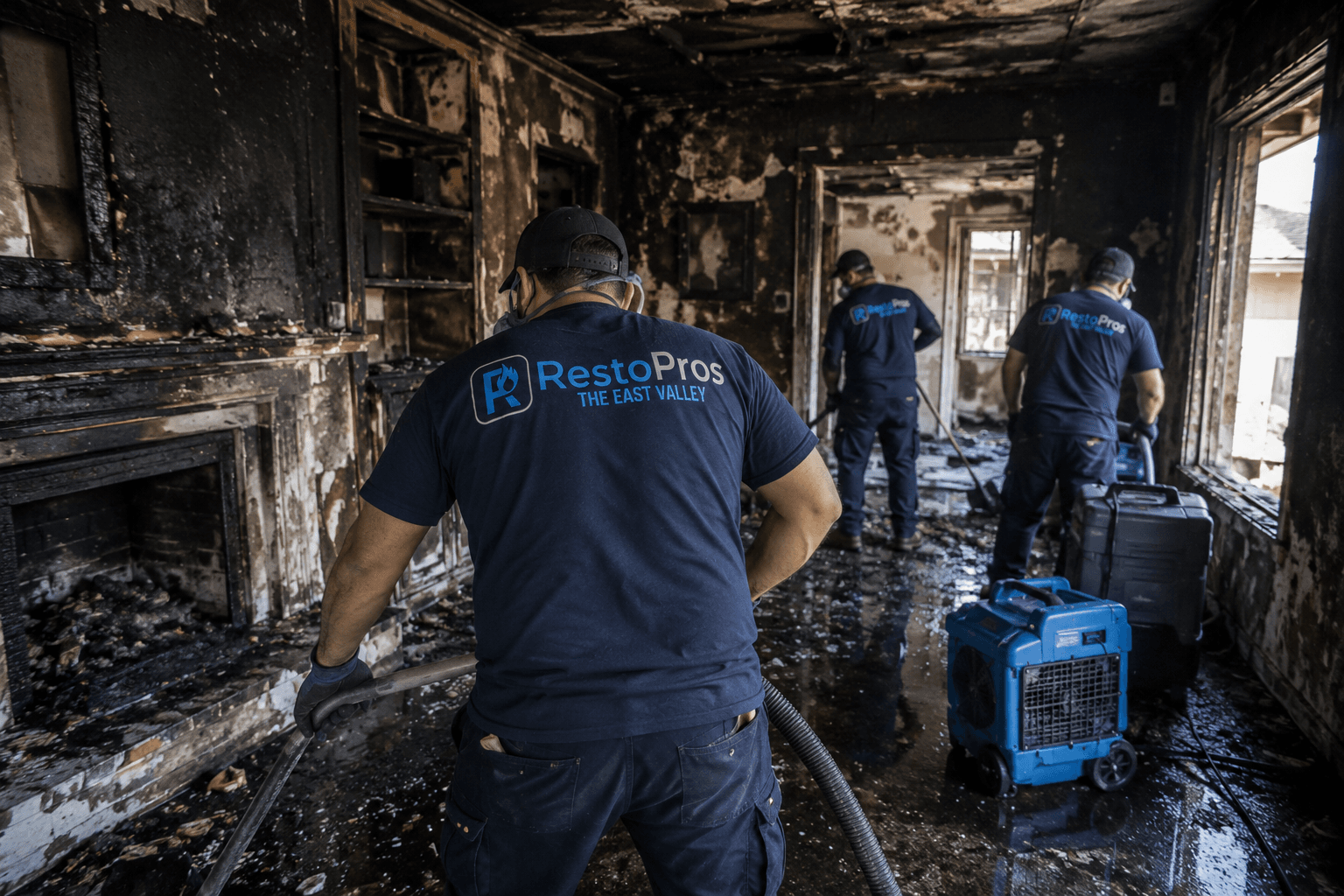
Our smoke damage restoration crews handle residue removal, odor treatment, content cleaning and HVAC cleanup. If the fire damaged cabinets, drywall or wiring, fire damage restoration covers the structural side and the rebuild.
Does Insurance Cover Kitchen Fire Damage?
A kitchen fire is a sudden, accidental loss, which is the kind of event homeowners policies generally cover, including smoke damage to other rooms and to belongings. Whether it is worth filing depends on your deductible and the size of the loss. Photograph everything before cleaning, keep receipts for cleaning supplies, laundering and any food you replaced, and ask your adjuster before you throw out anything you plan to claim. Our fire damage restoration cost guide explains what drives the price of a professional cleanup in Arizona.
Preventing the Next One
- Stay in the kitchen while frying, grilling, broiling or boiling, and turn off the burner if you have to leave.
- Keep towels, oven mitts, paper and packaging away from the stovetop.
- Heat oil gradually and watch for smoke, which means it is too hot.
- Keep a lid or baking sheet within reach whenever you cook with oil.
- Keep a working fire extinguisher in or near the kitchen, and know how to use it.
- Clean grease buildup from the range hood and filter regularly.
- Test smoke alarms monthly.
Frequently Asked Questions
How do you clean up after a small kitchen fire?
Ventilate, turn off the HVAC, and photograph the damage. Throw out exposed food. Vacuum extinguisher powder, dry clean soot with a chemical sponge, then degrease and wash hard surfaces from the top down. Launder fabrics and replace the HVAC filter. If residue or odor reached other rooms, call a professional.
Can I use food that was in the kitchen during a fire?
Throw out anything exposed to heat, smoke, soot or extinguisher chemicals, including food in permeable packaging and refrigerated food that smells of smoke. Smoke contamination is not always visible, so when in doubt, throw it out.
Is fire extinguisher powder harmful?
It is an irritant to the eyes, skin and lungs, so wear gloves and a mask when cleaning it up. The common multipurpose powder can also corrode metal and damage electronics if it absorbs moisture, so clean it up within a day or two.
How long does smoke smell last after a kitchen fire?
A light odor from a small fire can fade in days with ventilation and cleaning. Protein smoke from burned food can linger for weeks or longer if the residue is not removed, because it settles into fabrics, drywall and cabinet interiors.
Should I file an insurance claim for a small kitchen fire?
It depends on the size of the loss compared with your deductible. A pan fire with a little cleanup may not be worth a claim. Smoke damage across several rooms, damaged cabinets or a professional cleanup often is. Photograph everything first, then talk to your agent.
Can I paint over smoke-stained kitchen cabinets?
Not until the residue is cleaned off. Paint applied over grease and soot will not bond well, and smoke odor can bleed through. Clean and degrease first, then use a stain-blocking primer made for smoke damage before painting.
Need Help After a Kitchen Fire?
RestoPros of the East Valley handles kitchen fire cleanup, smoke odor removal and the repair work afterward, 24 hours a day. We serve fire damage restoration in Mesa, Gilbert, Chandler and Tempe. Inspections are free, and we work directly with your insurance company. Call (520) 482-3900.